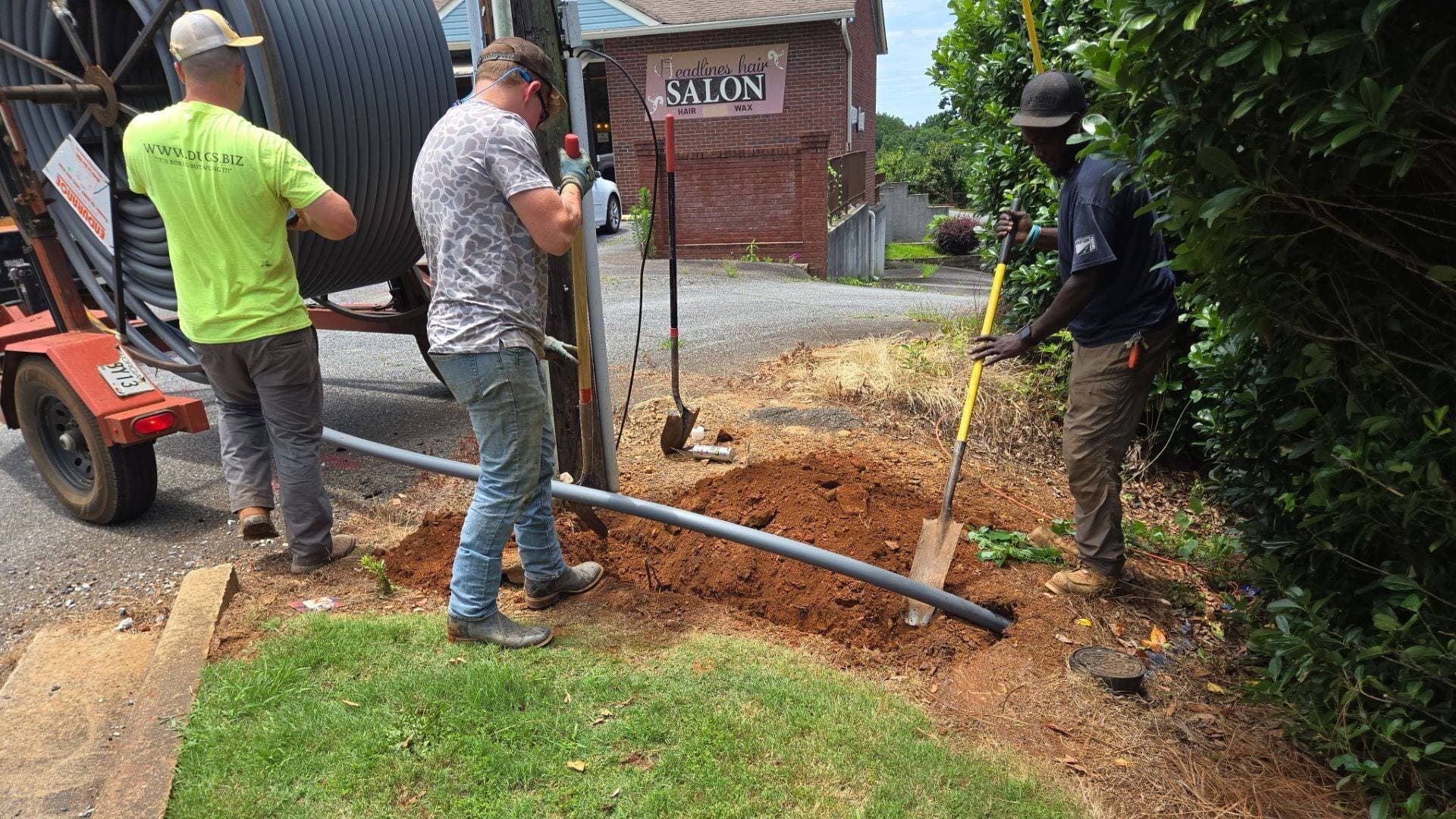
How to choose an underground utility contractor: 12 questions to ask
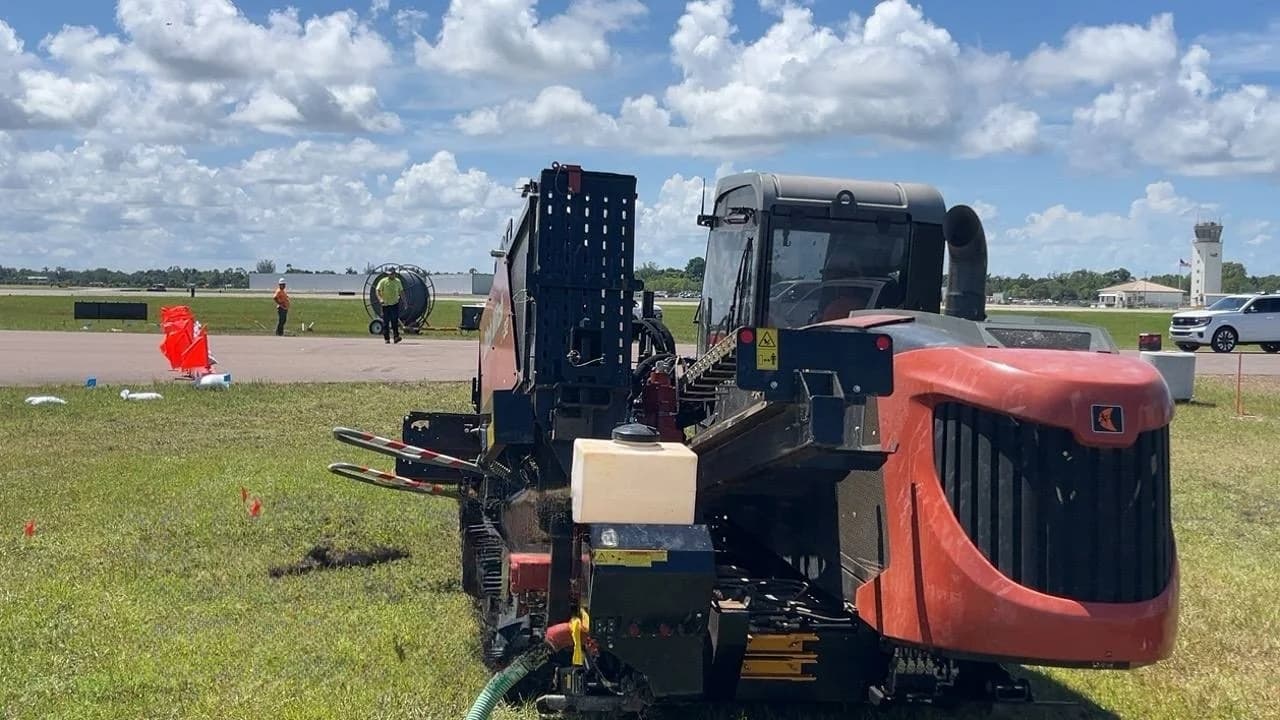
“How do I know the low bid isn’t the one that hits the gas main?” Three quotes for the same crossing land far apart, and the spread is rarely the rig. Twelve contractor questions sort a real underground utility contractor from a rig with a phone number. The non-negotiables: an 811 ticket with every PRIS response read, each crossing potholed, and a certificate with the additional-insured endorsement.
Why the cheapest underground utility contractor is usually the one who skipped a step
Bids on one bore differ by what one contractor chose not to price: potholing every crossing, a traffic plan, the vac trailer, fluid disposal. Strip those out and the number drops, and the first strike lands on your schedule.
Never take the bid that skipped potholing. For open digging, potholing is one of the care methods O.C.G.A. 25-9-8 lists. For directional drilling, the Georgia 811 Excavator Manual says crews must always properly expose each utility facility crossing, and that GUFPA requires drillers to follow the Common Ground Alliance’s Best Practices. The cheapest underground utility contractor is usually the one who drilled on paint.
The Common Ground Alliance’s 2024 DIRT Report sorts known damage causes into four groups: excavation practices 35 percent, no locate request 25, invalid use of the request 7 and locating practices 34. Only locating practices belongs to the locator and facility owner; the other three sit with whoever digs.
Questions 1 to 3: who locates, who potholes, and what happens after a strike
The first three are about 811 compliance: who files the ticket, how crossings get exposed, what happens after a strike. An underground utility contractor who fumbles any of them has told you enough; the licensing, insurance and bonding checklist covers the paperwork.
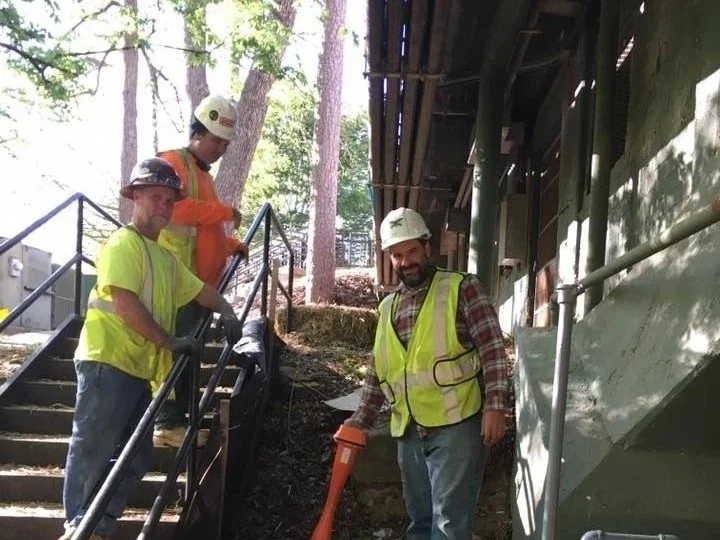
1. Who files the 811 ticket and reads the response?
Good answer: “We file it, we read every response in PRIS, and nobody drills until each utility has answered.” Under the Georgia Underground Facility Protection Act (GUFPA), the person planning the excavation submits the locate request, and whoever performs it is responsible for being aware of all information timely entered into PRIS before digging. A ticket is good for 30 calendar days. The statute’s notice floor is two full business days, starting the business day after filing; Georgia 811’s guidance says 3. Plan on 3.
Red flag: “You’re the owner, you call it in.” Whoever files it, the crew on the rig must check every PRIS response first.
2. Who potholes the crossings, and with what?
Good answer: “Every crossing inside the tolerance zone, with the vac trailer, before the pilot bore.” The act sets the tolerance zone at the facility’s width plus 18 inches either side. Inside it, reasonable care includes, without being limited to, at least one of hand digging, potholing, soft digging, vacuum excavation or pneumatic hand tools; other mechanical methods may be used with the facility owner’s or operator’s approval. A good underground utility contractor prices a pothole per crossing.
Red flag: “The marks are fresh, we’ll bore under them.” Paint does not show depth; the Georgia 811 and utility locating walkthrough shows what else it cannot tell you.
CGA’s 2024 DIRT Report puts water and sewer work in 24 percent of 2024 damages and telecom/CATV work in 23 percent, the two largest shares. A water service line or fiber run falls in one of them, so ask question 2 first.
3. What happens after a strike?
Good answer: Stop the rig. Get people out of the pit. Call 911 for gas or a hazardous liquid. Notify Georgia 811 and the facility owner. Photograph everything before anyone leaves. The act requires the stop, the notices and that 911 call; the photos are good practice.
Red flag: “We’d patch it and keep going,” or the opposite, “we’ve never hit anything.” Nobody can promise a strike-free bore.
Questions 4 to 6: bore logs, as-builts, drilling fluid and traffic control
The middle of the list is paperwork and mud. An underground utility contractor with a real bore log, a usable as-built, a fluid plan and a traffic plan can show each at the first meeting.
4. What is in the bore log and as-built?
Good answer: They pull out a real one. Per rod: depth, pitch and the locator’s reading, plus entry and exit angles, fluid mix, reamer passes and pullback notes. The as-built is a plan and profile tied to a fixed reference someone can find after the paint washes off.
Red flag: “We’ll mark it on your drawings after.” If the depth at rod 14 never got written down, nobody will know where that conduit sits, including the next underground utility contractor who crosses it.
5. Where does the drilling fluid go?
Good answer: “Returns stay in the pits, the vac trailer picks them up, and it goes to an approved site.” A good contractor can produce a disposal ticket. They also carry a plan for inadvertent returns in wet clay or fractured rock.
Red flag: A shrug, or “it soaks in.” A slurry trail toward a storm inlet on a reference job answers this one.
6. Who owns the traffic control plan?
Good answer: “The plan is in the permit package, drawn to the MUTCD, and we supply flaggers and signs.” Get in writing who draws the plan.
Red flag: “We just cone it off.” Cones without a plan are how a flagger ends up standing in a live lane.
Questions 7 to 9: the paperwork an underground utility contractor should sign
Paper questions bore people until the paper is missing. The permit decides who the inspector calls, the certificate who pays for a cracked slab, the bond who finishes an abandoned job. Ask for each by name and read it before you sign.
7. Who pulls the permit?
Good answer: On a state route, utility work in GDOT right of way is applied for through GPAS, which GDOT’s utility permitting page describes as its online application system for Utility Facility Encroachment Permits. Permit responsibility varies by project and is confirmed during the quoting process.
Red flag: “Permits are your problem,” with no idea which office issues them. Or a registration described as a prequalification.
8. Can I see the insurance certificate, the endorsement and the bond?
Good answer: The certificate arrives the same day, every line current, with pollution coverage where drilling fluid is in play, plus the additional-insured endorsement that extends the policy to you. The bond is separate. The SBA’s surety bond page says a performance bond ensures full completion of a contract and a payment bond ensures full payment to suppliers and subcontractors.
The same page caps the program at contracts up to $9 million non-federal and $14 million federal, so a small crew that cannot bond on its own may still qualify through an SBA-authorized surety agent.
Red flag: An expired date, “will provide upon award,” or an underground utility contractor who says the certificate “covers you” and cannot explain an endorsement.
9. What is your weather policy?
Good answer: A written clause: what counts as a weather day (standing water in the pits, saturated ground, lightning), who calls it, and whether it bills standby. After a week of rain on Georgia clay, a good contractor would rather slip a day than lose returns under your parking lot.
Red flag: “We drill in anything.” Or no clause, so the first rained-out Tuesday becomes a change-order argument.
Questions 10 to 12: rig class, pits, restoration and track record
The last three are about fit and history. When you hire a boring contractor, the rig has to match the product, the pits have to meet OSHA, the restored surface has to hold, and the references have to look like your job.
10. Which rig class, and how big and deep are the pits?
Good answer: The rig is sized to the pullback the product needs, with a reamer plan that steps the hole up in passes. Each pit gets dimensions and a yes or no on entry. OSHA’s 29 CFR 1926.651 requires a safe exit in trenches 4 feet or deeper within 25 feet of lateral travel, spoil 2 feet back and daily competent-person inspection. Section 1926.652 requires a protective system for anyone in the excavation unless the cut is entirely stable rock, or under 5 feet with a competent person finding no sign of cave-in.
Red flag: One small rig on every line of the quote sheet, or a 6‑foot pit a worker stands in with no protective system in the plan.
11. What does the restoration warranty say?
Good answer: Pits backfilled and compacted in lifts, density-tested where the spec or permit calls for it, the surface restored to match, and settlement inside a stated window fixed at no charge.
Red flag: “Some settling is normal.” It is normal when nobody compacted the pit.
12. Who are three references on a job like mine, and what is your safety record?
Good answer: Three jobs like yours, and permission to ask: did anything get hit, and what happened next? An underground utility contractor who offers a reference where something went wrong and was handled well tells you more than three clean ones, and it helps when the person who quotes the job also runs the drill. Then ask for the safety record: the experience modification rate on their workers’ comp policy and their OSHA 300 log summaries.
Red flag: Only residential references for a road crossing, or a list that is all one general contractor.
A scorecard for comparing underground utility contractor bids
Score the paper trail before the price. The table lists what a serious underground utility contractor hands over, when, and what it proves. A bid missing two rows is incomplete, and you pay to finish it after mobilization.
| Document | When | What it proves | Red flag |
|---|---|---|---|
| Certificate, endorsement and bond | Before signing | Their policy extends to you | Certificate only, or expired |
| Permit copy, permittee named | Before mobilizing | The inspector knows who to call | “Permits are your problem” |
| Traffic control plan | With the permit | Someone owns the lane closure | “We cone it off” |
| 811 ticket and PRIS responses | Before digging | Every member answered before work | No ticket number on the bid |
| Pothole log with depths | Before the pilot bore | Every crossing dug up and measured | “The marks were fresh” |
| Bore log and as-built | At pullback | Depth at every rod | “We’ll mark up your drawings” |
A good quote itemizes potholes, traffic control, fluid handling and restoration; the factors that move a directional boring quote walks through each.
Frequently asked questions
What questions should I ask an underground utility contractor?
Ask twelve: the 811 ticket, potholing, strike handling, the bore log and as-built, fluid disposal, traffic control, the permit, insurance and bond, weather, rig and pit size, restoration, and references and safety. An underground utility contractor with good answers shows paper (ticket number, pothole log, permit copy). Georgia 811’s process page sets the first bar: submit the ticket at least 3 business days before digging, and member utilities have at least two full business days after the day you submit to mark.
What insurance should a boring contractor have?
When you hire a boring contractor, expect general liability, commercial auto, workers’ compensation and an umbrella policy, with pollution liability when drilling fluid or a gas line is near the work. The SBA’s guide to business insurance describes general liability as protection against bodily injury, property damage, medical expenses and the cost of defending lawsuits. The certificate is a snapshot; ask for the additional-insured endorsement, which extends the contractor’s liability policy to you. Ask the agent, not the contractor, to send the certificate directly.
Do utility contractors need a license in Georgia?
Georgia licenses utility contractors at the state level through the Georgia State Board of Utility Contractors under the Secretary of State, which covers utility contractors, utility managers and utility foremen. That state license is separate from a local business license and from anything GDOT issues. Ask for the license number and check it with the board yourself. GDOT’s construction contractor page says anyone bidding on or performing work on GDOT projects must be prequalified or registered. That is a procurement gate for GDOT jobs, and a GDOT registration says nothing about a state license. Check all three.
How do I verify a contractor is registered with GDOT?
GDOT’s construction contractor page links a public directory of prequalified contractors and registered subcontractors; search the company name there. GDOT runs two qualification types, Prequalified Contractor and Registered Subcontractor, a Certificate of Qualification is generally valid for two years, and the page says a qualified or registered firm may take on work as long as it has the capacity and equipment and can be bonded for it. DUGS is a GDOT-registered subcontractor, and that directory is where to look us up. Either listing is a starting point for any contractor: neither type is a trade license or proof of insurance, so note the expiration date and keep checking.
What should be in a boring contract?
A contract with an underground utility contractor should list scope by footage, diameter and product, with crossings to pothole as their own line; who files the 811 ticket and locates private lines; who pulls the permit and supplies traffic control; the bore log and as-built as deliverables; the certificate, endorsement and any bond the owner requires; a weather clause; and a written restoration warranty. That mirrors NASTT’s HDD Good Practices course and its planning topics: utility surveys, bore planning and permitting.
Who is responsible for damaged utilities during a bore?
Georgia law puts the locate request on whoever plans the excavation, and the wait and reasonable care inside the tolerance zone on the excavator, who must stop and notify after a strike, calling 911 for gas or hazardous liquid. The facility owner carries part of it: O.C.G.A. 25-9-9(a) on Georgia 811’s law page requires marks accurate to within 18 inches horizontally, and an excavator who followed 25-9-8 and saw no obvious sign of a mismark is not liable for damage caused by the owner’s inaccurate location information. So photograph the marks, and the pothole at each crossing, before the drill goes in.