Directional boring cost: the factors that move the price per foot
“How much does it cost to directional bore?” is the first question on most calls, and the answer is that directional boring cost is priced per job, from the site. The same 300 feet of conduit can be a short day in a lawn or several under a county road with rock. Below: what moves the number, what a real quote itemizes, and how to read the one that came in low.
Directional boring cost is a job price, not a menu price
There is no rate card for a bore, and a contractor who reads one over the phone is guessing with your money. The directional boring cost is built from the site: product, ground, depth, crossings and what gets put back.
Per-foot figures in search results blend a 40‑foot irrigation sleeve with a 900‑foot fiber run. This post gives no per-foot price of its own: the public figures we could find on agency hosts are bid items on state contracts, and one is in the FAQ. DUGS prices per job after reviewing the plans, with no public rate card, and the person who quotes the job runs the drill.
Some contractors will argue with this: under about 500 feet, refuse a per-foot price. Insist on a job price listing the pothole count, pit locations and restoration standard. Per-foot pricing on a short bore rewards skipping the parts that keep the head out of a water main. Our guide to how horizontal directional drilling works covers where footage rules.
Related reading: Auger boring vs directional drilling for cased road and rail crossings.
The ten factors that move directional boring cost
Ten factors set the number: product diameter, product type, soil and rock, depth and cover, crossings to pothole, pit access, mobilization, traffic control, fluid disposal and restoration. Some are fixed blocks that ignore footage. Others scale with every rod. The table groups the ten into eight rows, with what you control in the last column.
| Factor | Why it moves the price | What you control |
|---|---|---|
| Diameter and product | Bigger hole, more passes, bigger rig | Spec the size you need |
| Soil and rock | New tooling, slower pilot, bigger rig | Share boring logs, old plans |
| Depth and cover | Longer entry run, deeper pits, shoring | Set the cover the owner needs |
| Crossings to pothole | Each line in the tolerance zone gets exposed | Mark private lines on the drawing |
| Pit access | Smaller rig or hand-dug pits | Clear a lane for rig and vac |
| Mobilization | Rig, vac, water, mud, crew: one block | Bundle nearby bores |
| Traffic control, permits | Closures, flaggers, encroachment permits, night work | Start the permit early |
| Fluid and restoration | Returns hauled, pits compacted, surfaces put back | Define “restored” in writing |
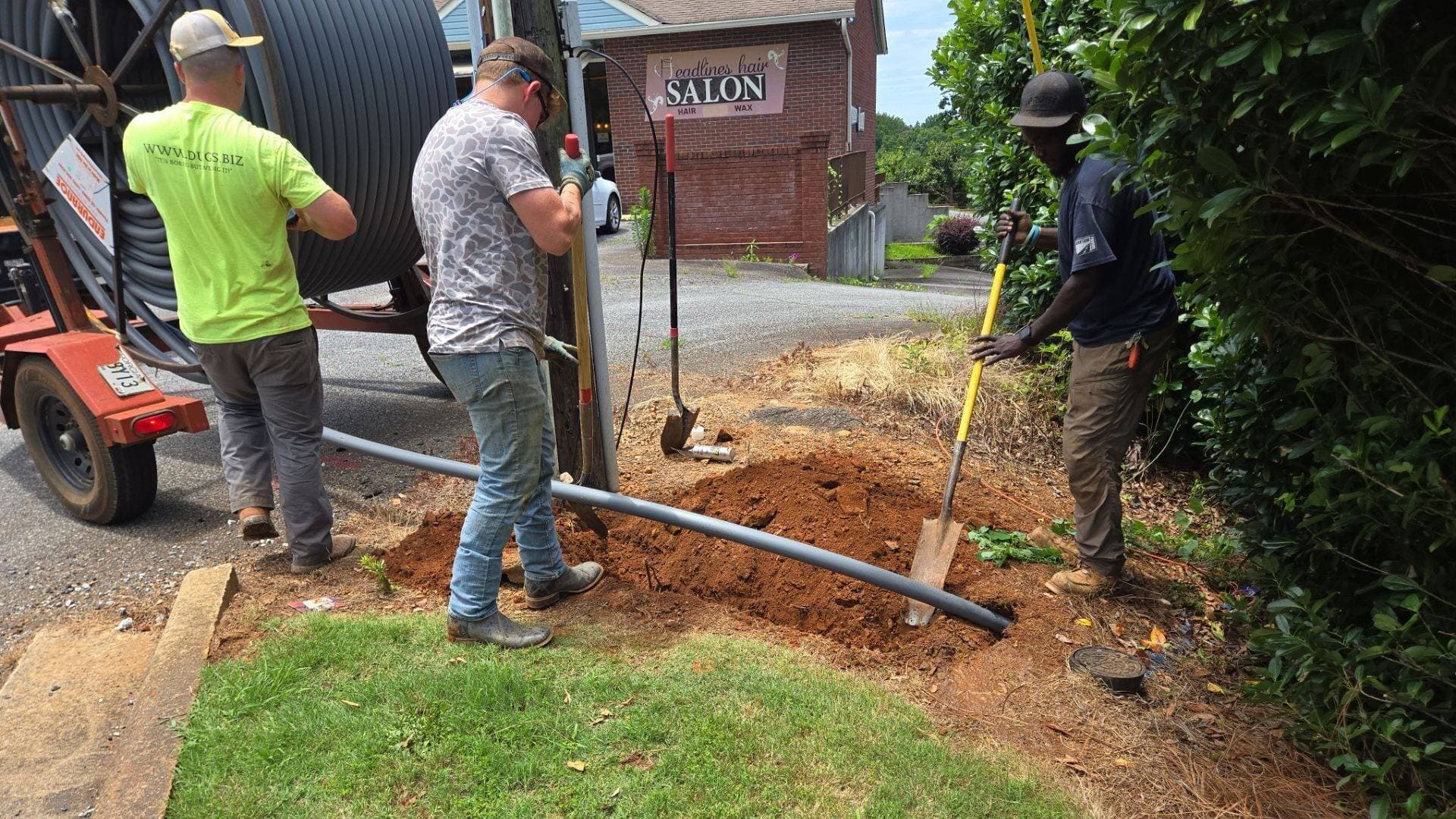
Diameter decides the hole, and the hole decides the rig. PPI’s Handbook of PE Pipe, chapter 12 on directional drilling, puts normal over-sizing of the reamed hole at 1.2 to 1.5 times the carrier pipe diameter and says mini-HDD rigs typically handle pipe up to 10 or 12 inches. A 12‑inch main is a pilot, reaming passes, a swab pass and a pull the same chapter puts at 1 to 2 feet per minute.
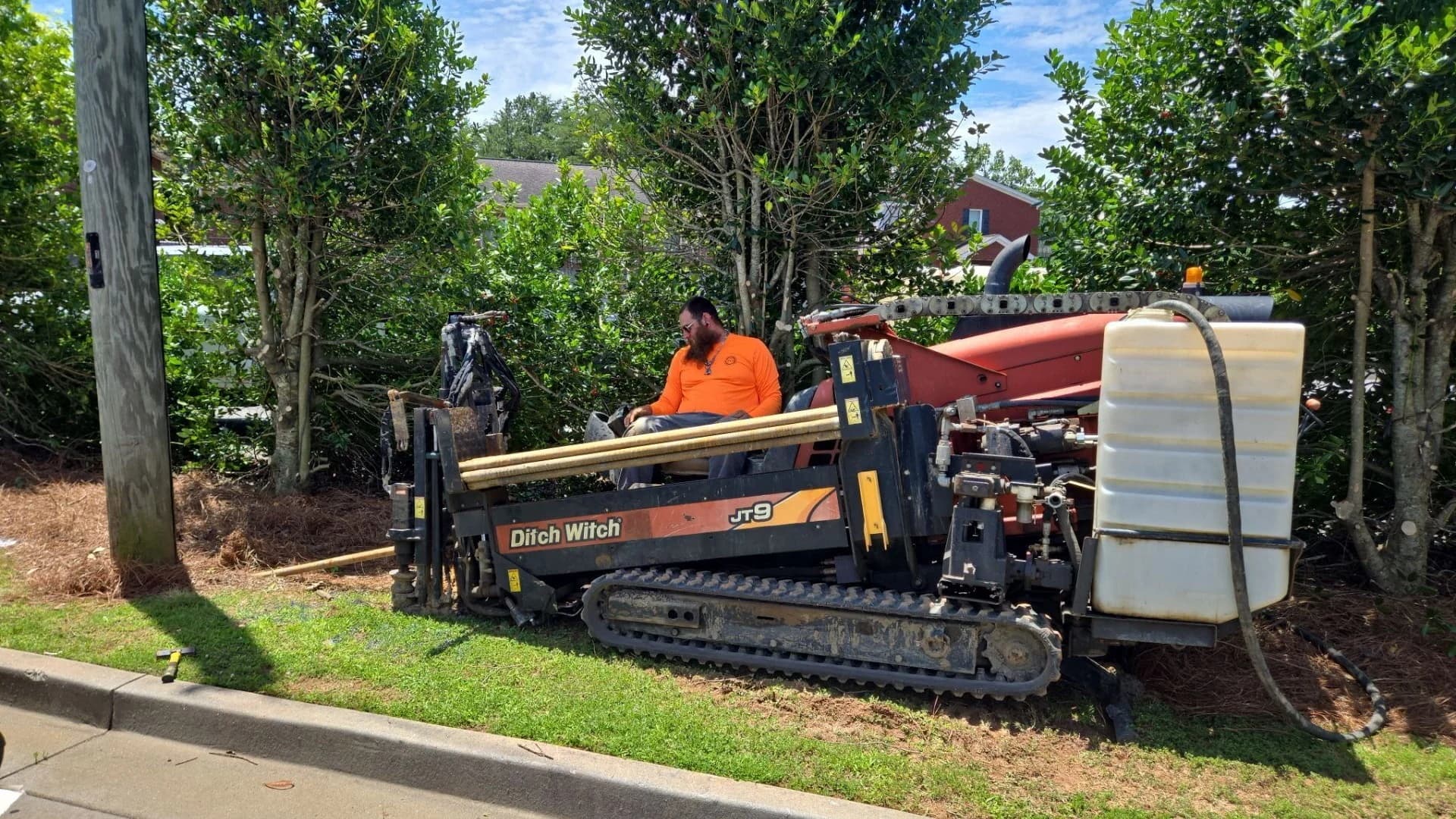
The rig class follows the pull, and it is a price line of its own. Ditch Witch’s JT20 spec sheet lists 17,000 lb of thrust, 20,000 lb of pullback, a 107‑foot minimum bend radius and 11,890 lb with pipe on board: the radius sets how much run it needs to reach depth, the weight sets what hauls it.
Crossings, depth and pits: the cost hiding in the drawing
The parts of directional boring cost that surprise a first-time buyer are the crossings to pothole, the depth to clear them, and the pits deep enough to need shoring. All three are priced before the rig moves, and all three show up on the drawing if someone reads it with a highlighter.
Every line the bore crosses is a hole in the ground first. Georgia 811’s page on the Georgia Underground Facility Protection Act defines the tolerance zone as the width of the facility plus 18 inches on either side of its outside edge. Inside it, the law requires reasonable care, including at least one of hand digging, potholing, soft digging, vacuum excavation or pneumatic hand tools; other mechanical methods need the owner’s approval. The same page sets the locate window at two to eight business days, counted from the business day after filing.
Good crews stage the vac at the first crossing before the rig is unloaded; a rig idling on a pothole is a crew on the clock. Depth gets priced twice. Ducking a deep storm line lengthens the entry run, and FHWA’s sample spec (see the FAQ) pays surface length, no additions for sweeps, so the extra length is priced elsewhere.
And a pit 5 feet or deeper that a worker enters needs a protective system under OSHA’s excavation standard, 1926.652, unless it is dug entirely in stable rock. The competent-person exception only covers excavations under 5 feet. A trench box is a delivery and a line on the quote.
The cost of a skipped crossing: CGA’s report, Between the Lines: The True Cost of Damages to America’s Buried Utilities, models 668,999 damage incidents for 2025 at an estimated $83.2 billion a year and finds that repairing the line is just 5.9 percent of that. The rest falls on everyone else: emergency response, outages, lost business, injuries and the community around the strike. Potholing is the line that keeps a bore out of those numbers.
Why rock changes the tool, the rig and the price
Rock moves directional boring cost more than any other factor on many jobs, because it changes what is on the end of the rod, how fast the rod moves, and sometimes which rig shows up. A dirt bore that finds a ledge partway down becomes a different job with the same footage, and the walkover locator starts showing the head wandering.
The PPI chapter has designers of long crossings run a geotechnical study first, with borings at roughly 700‑foot intervals, as few as three under 1,000 feet, at least 30 feet off the path so pressurized mud does not find the test hole. On a 300‑foot utility bore nobody drills borings. Old plans, the last road cut on the street and the driller’s read answer the rock question, and the price carries a rock clause.
The tell that a crew has hit rock is the returns, not the rod count: grey slurry turns to gritty paste, the pilot slows to a rod every half hour, and the head drifts off line. Then rock tooling goes on, an air hammer behind the head or a dual-rod rig where an inner rod turns the bit while the outer rod steers.
Directional boring cost on the same 300‑foot bore at three sites
Illustrative, not a quote or a past job. Put the same 300 feet of 4‑inch HDPE power conduit under a lawn, a commercial parking lot, and a county road with a rock ledge. The rod count is nearly the same on all three sites, and the price spreads wide.
Lawn. Sandy loam, one water service to cross, pits in the grass, shallow cover, no pavement, no permit. One pothole, one pilot, one pull, seed and straw: the shortest of the three. Mobilization is the biggest block in this price.
Parking lot. Same conduit, six crossings: irrigation, lighting, gas, comms, storm and the building’s water. The path drops under the storm line, so the entry run gets longer. Pits go in the planted islands so the asphalt stays whole, as the DUGS jobsite gallery shows. Six potholes can outlast the pilot bore, and the pothole count is what moved the price.
County road. An encroachment permit, a profile deep enough for the road owner’s cover, and a ledge under the soil. That means rock tooling or a bigger rig, an exit pit a worker enters that needs a box (soil over rock gets no stable-rock exception), a rock clause, and standby if the permit slips. By far the longest of the three, and the comparison of directional boring vs trenching shows why the road still goes to the bore.
We cover the details separately in What is directional boring? How a bore day goes, step by step.
What a good bore quote itemizes
A good quote reads like a scope: you can see where the directional boring cost sits. It names footage, diameter and product, counts the crossings to pothole, locates the pits, states the restoration standard, says where the fluid goes, and lists its exclusions. If a line is missing, it is either free or it is yours.
In the order it matters: mobilization as a stated block. Potholing with a count and a per-hole price for extras. The bore with footage, diameter, product and cover, plus the bore profile. Pits and compaction. Restoration with the standard named. Traffic control and permits. Fluid haul-off. Tracer wire and as-builts. Exclusions: rock, dewatering, standby, unmarked private lines.
Restoration is where the cheap quote hides its discount. The FHWA manual on controlling pavement utility cuts reports that San Francisco charges a street damage restoration fee from $1.00 per square foot on streets 15 to 20 years old up to $3.50 per square foot on streets under five years old, plus an inspection fee of $0.80 per square foot. The newer the pavement, the more a cut costs, and the bore’s answer is to leave the pavement whole.
Now read the low bid again. No potholing line means the crew plans to trust paint. Restoration “included” with no standard means backfill and a rake. No fluid disposal line, and the returns (plus any inadvertent returns that surface in a yard) become your problem. No rock clause, and a change order is waiting.
What to send for an accurate bore quote
Five things turn a quote from a guess into a number: footage pit to pit, diameter and product, the utility type and owner, a drawing or aerial with known lines and pits marked, and the target date.
Add anything that reveals the ground: old plans, a nearby boring log, the last road cut on the street. Say who holds the permit, because permit responsibility varies by project and is confirmed during the quoting process. Say who marks the private lines past the meter. The twelve questions to ask an underground utility contractor cover the rest.
Frequently asked questions
How much does it cost to directional bore?
There is no public rate card for a directional bore, because directional boring cost is set by the site: diameter, rock, depth, crossings to pothole, pit access, mobilization, traffic control and restoration. A Georgia DOT pay estimate on a highway contract let on May 20, 2016 bids a 3‑inch directional bore at $21.04 per linear foot and pays 1,700 added feet under the same item to relocate state fiber. It is one line from one contract at an old bid price, with traffic control and conduit paid under separate items, so treat it as a reference point, not a going rate. Send footage, diameter, product, a drawing and a date for an itemized quote.
Is directional boring cheaper than trenching?
Per foot of drilling, directional boring cost is often the higher number. Per finished job it is often lower, because a trench gets backfilled, compacted and repaved while a bore leaves the surface in place. FHWA’s manual on pavement utility cuts reports that Washington, DC allowed over 5,000 utility cuts during 1996 and estimated over 6,000 for 2000, and names premature pavement failure as the cost. Short, shallow dirt runs are the trench’s to win. Pavement or landscaping usually goes to the bore.
What is included in a directional boring quote?
A directional boring quote covers the three phases of the bore. NASTT’s trenchless glossary defines HDD as a surface-launched method that creates a pilot bore along the design pathway, reams it in one or more passes to a diameter suited to the product, and pulls the product in as the final step. Around those steps a good quote itemizes mobilization, potholing with a crossing count, pits and backfill, drilling fluid haul-off, traffic control, permits, restoration with a named standard, tracer wire, as-builts, and exclusions such as rock and standby. Ask to see the planned bore profile before the rig shows up.
Why do bore quotes vary so much?
Bore quotes vary because contractors carry different amounts of risk inside the price. One bid assumes the paint is right, the ground is dirt and the locate arrives on time; the other prices potholing at every crossing, a rock clause and standby. The schedule risk is real. Drawing on eight 811 centers, CGA’s 2024 DIRT Report appendix on locate timeliness found a 38 percent chance of excavators being unable to start on time because of an incomplete locate response. Compare scopes before totals.
How is directional boring priced, per foot or per job?
Agencies price directional boring by the foot. The sample trenchless specification in FHWA’s utility cuts manual pays HDD per lineal foot of bore by diameter class, from under 6 inches to 30 inches and greater, measured in place along the surface of the ground, with no additions or deductions for sweeps. Long fiber runs are bid the same way because footage drives the job over miles. On a short utility bore, directional boring cost is mostly fixed blocks: mobilization, potholing, pits, restoration and a crew on the clock whether the bore is 80 feet or 400. DUGS prices per job.
How much does rock add to directional boring cost?
Rock is frequently the largest single swing in directional boring cost, because it changes the tooling, the rig and the rate of advance. A dirt bit gets swapped for an air hammer or a dual-rod system that turns the bit with an inner rod while the outer rod steers. Ditch Witch’s JT/AT32 brochure lists 1,200 ft-lb of inner rotational torque for hard formations and 32,000 lb of thrust and pullback. Expect a rock clause wherever the ground is unknown.